My Day, Every Day: Talking About Daily Routines
Core PathWay
1 What We Do Every Day
Some things happen again and again. Every morning you wake up. Every day you have breakfast. Every week you go to work or school. These are your routines and habits.
When we talk about these regular actions, we use a special verb form in English. We call it Present Simple. It helps us say what we do every day, what we usually do, and what happens regularly in our life.
Today you will meet Marco. He is an office worker. He has a typical workday routine. First, he wakes up. Then he gets ready. Next, he goes to work. You will learn how to describe Marco’s day — and your own day too.
Key Terms
2 How Present Simple Works
Present Simple is easy to make. But there is one important rule you must remember. The verb changes with different people.
When you talk about I, you, we, or they, the verb stays the same. When you talk about he, she, or it, you add -s or -es to the verb. This small change is very important in English.
Focus
- Present Simple describes habits, routines, and things that happen regularly
- With I/you/we/they: use the base verb (no change)
- With he/she/it: add -s, -es, or -ies to the verb
- Time words like ‘every day’, ‘usually’, ‘always’ often appear with Present Simple
Rules
- I/you/we/they + base verb: I wake up, you leave home, we catch the bus, they start work
- He/she/it + verb-s/es/ies: he wakes up, she leaves home, it arrives, Marco brushes his teeth
- Add -es after -s, -sh, -ch, -x, -o: finish → finishes, catch → catches, go → goes
- Change -y to -ies after consonant + y: study → studies, try → tries
Examples
- I get up at 7 o’clock every morning. (base verb with I)
- Marco leaves home at 8:15. (verb + -s with he)
- She catches the bus to work. (verb + -es after -ch)
Common mistake
3 Marco’s Morning
Marco is 28 years old. He works in an office in the city centre. His morning routine is the same every day.
First, his alarm clock rings at 6:30. Marco wakes up and looks at his phone for a few minutes. Then he gets up and goes to the bathroom. He brushes his teeth and has a quick shower.
Next, Marco goes to the kitchen. He has breakfast — usually toast and coffee. He reads the news on his tablet while he eats. After that, he gets dressed. He wears a shirt and trousers for work.
Marco leaves home at 8:15. He walks to the bus stop. The bus arrives at 8:25 and he catches the bus into town. The journey takes 20 minutes.
Marco arrives at work at 8:50. He says hello to his colleagues. ‘Good morning! How are you today?’ they ask. ‘I’m fine, thanks,’ Marco answers.
At 9 o’clock, Marco starts work. He checks his emails first. Then he looks at his tasks for the day. His routine is simple, but it works well for him.
At 12:30, Marco and his colleagues have lunch together in the office kitchen. They talk about their work and their plans for the weekend.
Marco finishes work at 5:30 in the afternoon. He catches the bus again and goes home. His evening routine starts when he arrives at his flat. But that’s another story!
Key Terms
4 Your Turn: Describe Your Morning
Now write about your own morning routine. Use Present Simple and show the order of your actions.
5 Remember the Key Points
You now know how to talk about daily routines in English. Let’s remember the most important rules.
There are two forms of Present Simple affirmative. With I, you, we, and they, use the base verb: I wake up, you leave home, we start work. With he, she, and it, add -s or -es: he wakes up, she leaves home, it arrives.
Here is a simple memory rule: he/she/it takes -s. Say it like this: ‘He takes the bus’ — the word ‘takes’ has -s, and it reminds you that he/she/it verbs need -s too.
Use Present Simple when you talk about habits and routines — things that happen regularly or every day. Words like ‘usually’, ‘every day’, ‘always’, and ‘often’ are good signals for Present Simple.
In the next lesson, you will learn how to make questions and negative sentences with Present Simple. But for now, practice describing your daily routine. The more you use these verbs, the more natural they will feel!
Member-Exclusive Practice Bar
Access a wide range of integrated practice for this unit — from Vocabulary and Grammar activities to AI-curated Writing tasks and Thematic Chat practice.
This feature is available to YSP members.
Explore Membership Benefits
Member-Exclusive Vocabulary Review & Acquisition System
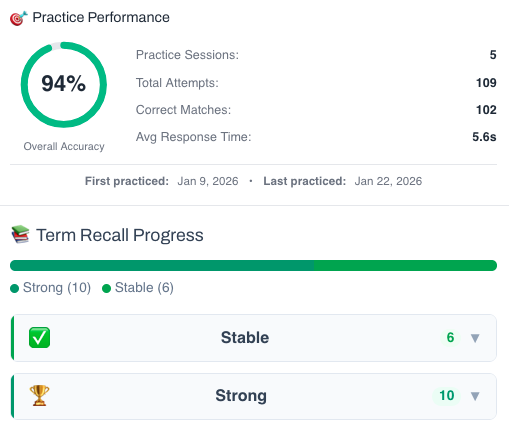
This isn’t a simple quiz — it’s a fully tracked learning system. You build knowledge through recognition, then recall, and your progress feeds directly into the Integrated Practice Bar (Writing tasks, AI Chat, and more).
- Practice sessions, accuracy, and response-time tracking
- Term strength levels (Learning → Stable → Strong)
- Personal progress history for each unit
This feature is available to YSP members.
Explore Membership Benefits