Talking About Time: How Long and Since When?
Core PathWay
1 Old Friends, New Lives
Imagine you’re at a reunion with friends you haven’t seen for years. What do you talk about? You want to catch up on everyone’s news and find out what has changed.
When you meet old friends, you naturally talk about time: ‘How long have you lived in London?’ or ‘When did you move there?’ In English, we use Present Perfect with for and since to connect the past with now. We say ‘I’ve lived here for three years’ (the three years started in the past and continue to now). We say ‘I’ve known Maria since 2010’ (our friendship started in 2010 and continues to now).
Many Italian speakers find this difficult because in Italian you use Present Simple for these situations. In Italian you say ‘Vivo qui da tre anni’ (literally: ‘I live here from three years’). However, in English, if you say ‘I live here for three years’, it sounds wrong because the Present Simple doesn’t show the connection between past and present. You must use Present Perfect: ‘I’ve lived here for three years.’
This grammar point helps you talk naturally about your career, your relationships, where you’ve settled, and how you keep in touch with people. It’s essential for conversations about life changes and ongoing situations.
Key Terms
2 For or Since? Understanding the Difference
The words for and since both talk about time, but they work in different ways. Understanding this difference will help you speak more accurately about ongoing situations.
For measures duration – it tells us how long something has continued. You use it with periods of time: for two hours, for six months, for a long time, for ages. Since marks a starting point – it tells us when something began. You use it with specific moments in time: since Monday, since 2015, since I moved here, since we met. Both work with Present Perfect to show that something started in the past and continues now.
Focus
- FOR measures duration (how long): for + period of time
- SINCE marks starting point (when it began): since + specific time/moment
- Both require Present Perfect to show past → now connection
- Common with state verbs: live, work, know, be, have
Rules
- Use FOR with time periods: for three years, for a few months, for ages, for a long time
- Use SINCE with specific starting points: since 2020, since January, since I graduated, since we moved
- Form: Subject + have/has + past participle + for/since + time expression
- The action or state started in the past and continues to the present moment
Examples
- I’ve worked at this company for five years. (duration: five years)
- She’s lived abroad since 2018. (starting point: 2018)
- We’ve been colleagues since we started here. (starting point: when we started)
Common mistake
Key Terms
3 State Verbs: The Natural Partners of For and Since
Some verbs work perfectly with for and since in Present Perfect Simple. These are called state verbs because they describe states or situations, not actions.
The most common state verbs with for/since are: live (I’ve lived here for years), know (We’ve known each other since school), work (She’s worked there since May), be (He’s been married for ten years), have (They’ve had that car since 2019), and own (We’ve owned this apartment for ages). These verbs describe ongoing situations that started in the past and continue now.
Action verbs are different. Verbs like study, wait, rain, or play describe activities, not states. When you want to show these actions continuing over time, you usually need Present Perfect Continuous (I’ve been studying for three hours), not Present Perfect Simple. However, state verbs almost never use the continuous form with for/since – you say ‘I’ve known her for years’, not ‘I’ve been knowing her for years’.
This distinction matters because in conversations about life changes, you’ll mostly use state verbs. When friends ask ‘How long have you lived in Rome?’ or ‘How long have you been a teacher?’, they’re asking about states that continue to now. Recently, more learners have understood this difference, and their English has become more natural and unchanged by interference from their first language.
Key Terms
4 A Reunion Conversation
Sara: Marco! I can’t believe it’s you! How long has it been?
Marco: Sara! It must be ten years! I haven’t seen you since our university reunion in 2014. How have you been?
Sara: I’ve been great! So much has changed. I’ve lived in Barcelona for eight years now. I moved there in 2016 for work and I’ve stayed ever since. What about you? Are you still in our hometown?
Marco: No, I left eventually! I’ve worked in Milan since 2017. I’ve been with the same company for seven years now. It’s been a good career move. And I got married!
Sara: That’s wonderful! Congratulations! How long have you been married?
Marco: Thank you! We’ve been married for four years. We met at work – she’s been my colleague since I started there. Meanwhile, we’ve bought an apartment near the city centre. We’ve owned it for two years now.
Sara: That sounds perfect. And do you still keep in touch with anyone from university?
Marco: I’ve stayed in contact with a few people. I’ve known Paolo since we were eighteen, and we still meet up regularly. He’s lived in Rome for his entire career – some things remain unchanged! What about your life in Barcelona? Are you in a relationship?
Sara: Yes, I’ve been with my partner for five years. We’ve lived together since 2020. He’s Spanish, so I’ve learned the language quite well. I’ve worked for an international company since I arrived, which has been perfect for me.
Marco: It sounds like you’ve really settled there. Do you think you’ll stay?
Sara: I think so. I’ve been happy there for a long time now. It’s become home. But I’ve missed everyone here! I’m so glad we’ve caught up. We should definitely stay in touch.
Marco: Absolutely! We’ve been friends since 2004 – that’s twenty years! Let’s not leave it so long next time.
5 What You’ve Learned
You’ve now learned how to use Present Perfect with for and since to talk about situations that started in the past and continue to now. This is essential for natural conversations about your life, especially when you catch up with old friends or talk about where you’ve settled.
Remember the key difference: for measures duration (for three years, for a long time), while since marks the starting point (since 2020, since I moved here). Both require Present Perfect in English, even though your language might use present tense for these situations.
State verbs like live, work, know, be, have, and own are the most common verbs you’ll use with for and since. These verbs describe ongoing states, not actions. When you want to say how long you’ve lived somewhere, how long you’ve known someone, or how long you’ve worked in your career, you’ll use these patterns naturally. Practice using them when you talk about your relationships, your hometown, time spent abroad, and how you keep in touch with people. This grammar connects your past experiences with your present situation, making your English sound natural and accurate.
Use the VAS to build solid recognition and recall of the terms below.
✔ Every correct Match = +1 point
✔ Every correct Recall = +2 points
🎓 Reach 5 points with good accuracy and the term is automatically promoted to your Personal Dictionary.
Incorrect answers lower accuracy, meaning more correct Matches or Recalls may be needed to reach promotion.
Member-Exclusive Vocabulary Review & Acquisition System
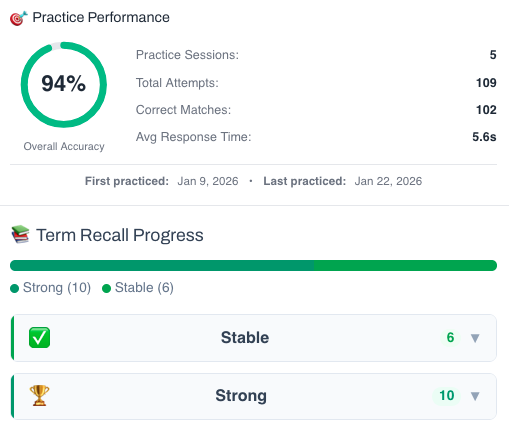
This isn’t a simple quiz — it’s a fully tracked learning system. You build knowledge through recognition, then recall, and your progress feeds directly into the Integrated Practice Bar (Writing tasks, AI Chat, and more).
- Practice sessions, accuracy, and response-time tracking
- Term strength levels (Learning → Stable → Strong)
- Personal progress history for each unit
This feature is available to YSP members.
Explore Membership BenefitsMember-Exclusive Practice Bar
Access a wide range of integrated practice for this unit — from Vocabulary and Grammar activities to AI-curated Writing tasks and Thematic Chat practice.
This feature is available to YSP members.
Explore Membership BenefitsMember-Exclusive Sentence Builder
Reconstruct scrambled sentences to practice word order and develop your grammar intuition.
This feature is available to YSP members.
Explore Membership Benefits