Non-Literal Phrasal Verbs: Common Figurative Meanings
Core PathWay
1 Why Phrasal Verbs Are Tricky
English has special verb phrases called phrasal verbs. Sometimes you can guess the meaning. For example, ‘sit down’ means sit + down. Easy! But many phrasal verbs have meanings you cannot guess from the words. This is the tricky part.
Imagine you are a beginner learning to play the guitar. This is your new hobby. You need to search for a good teacher online. You need to find information about chords. You need to care for your guitar equipment. Sometimes practice is hard and you feel frustrated. You want to stop. But if you continue, your skill will improve and you will see progress.
In this page, we will learn seven very common phrasal verbs. You cannot translate them word by word. You must learn them as complete phrases with their own special meanings. These phrasal verbs will help you talk about learning, hobbies, and everyday life.
Key Terms
2 Seven Essential Non-Literal Phrasal Verbs
These seven phrasal verbs are very common in English. The meaning is not the same as the individual words. You must learn each one as a complete phrase. Some of these phrasal verbs can be separated. Some cannot. We will show you the rules and give you examples from learning and hobbies.
Focus
- The meaning is idiomatic, not literal — you cannot guess it from the separate words
- The particle (up, after, for, off) changes the verb meaning completely
- Some phrasal verbs are separable (you can put the object between verb and particle), some are inseparable (verb and particle must stay together)
Rules
- look after = care for (inseparable). Example: I look after my guitar. NOT: I look my guitar after.
- look for = search for (inseparable). Example: She looks for a teacher. NOT: She looks a teacher for.
- look up = find information, usually in a book or online (separable). Example: He looks up the chord / He looks the chord up. This is NOT the same as the literal meaning ‘raise your eyes upward.’
- give up = stop trying (separable). Example: Don’t give up! / Don’t give it up!
- take off = become successful suddenly (inseparable). Example: Her music career took off last year.
- put off = postpone, delay (separable). Example: I put off my lesson / I put my lesson off.
- turn up = arrive (inseparable). Example: The teacher always turns up on time.
Examples
- I look after my new guitar carefully. I clean it every week. (care for)
- When I don’t understand a chord, I look it up on YouTube. (find information — separable)
- My first lesson was difficult. I wanted to give up, but my teacher helped me continue. (stop trying)
Common mistake
Key Terms
3 Learning Guitar: A Beginner’s Journey
Alex wanted a new hobby. He decided to learn the guitar. He was a complete beginner, so he needed help. First, he needed to look for a good teacher. He went online and read many reviews. He found a teacher called Maria. She had excellent reviews and her lessons were not expensive.
Before his first lesson, Alex bought a guitar. The shop assistant told him, ‘You must look after this equipment carefully. Clean it after you play. Keep it in the case.’ Alex promised to care for his new guitar well.
In his first lesson, Maria showed Alex some basic chords. Alex tried to play them, but his fingers hurt. ‘This is normal,’ Maria said. ‘All beginners feel this. Don’t give up!’ After the lesson, Alex went home and tried to practice. But the chords were difficult. He didn’t understand the finger positions, so he looked them up on YouTube. He watched several videos and slowly started to understand.
Some days, Alex felt frustrated. His fingers were sore and the progress was slow. Sometimes he wanted to give up completely. Other days, he was tired after work and he put off his practice session. ‘I’ll practice tomorrow,’ he told himself.
But Alex continued. Every week, Maria turned up for their lesson on time. She was patient and encouraging. After three months, something changed. Alex could play five songs. His skill started to improve quickly. His fingers didn’t hurt anymore. His friends were impressed. ‘Your guitar playing really took off!’ they said.
Alex learned an important lesson. When you start something new, it’s hard. You need to look for good help. You need to look up information when you don’t understand. You must look after your equipment. Sometimes you feel frustrated and want to give up or put off your practice. But if you continue, your skills will take off. And if you have a good teacher who always turns up and supports you, success will come.
Key Terms
4 Your Learning Experience
Now write about your own experience learning something new.
5 Remember: Learn Phrasal Verbs as Complete Phrases
You learned seven important phrasal verbs today. These phrasal verbs have special meanings. You cannot translate them word by word. You must learn each one as a complete phrase.
Here is the key rule: when you see a phrasal verb, don’t translate word by word. Learn it as a fixed phrase with its own meaning.
Here are the seven phrasal verbs with simple one-word meanings:
• look after = care for
• look for = search
• look up = research / find information
• give up = quit / stop trying
• take off = succeed / become successful
• put off = postpone / delay
• turn up = arrive
These phrasal verbs are very common in everyday English. You will hear them in conversations, podcasts, videos, and songs. When you hear them, notice how people use them. Write them in a phrasal verb notebook with an example sentence. This will help you remember them and use them naturally in your own English.
Member-Exclusive Practice Bar
Access a wide range of integrated practice for this unit — from Vocabulary and Grammar activities to AI-curated Writing tasks and Thematic Chat practice.
This feature is available to YSP members.
Explore Membership BenefitsMember-Exclusive Vocabulary Review & Acquisition System
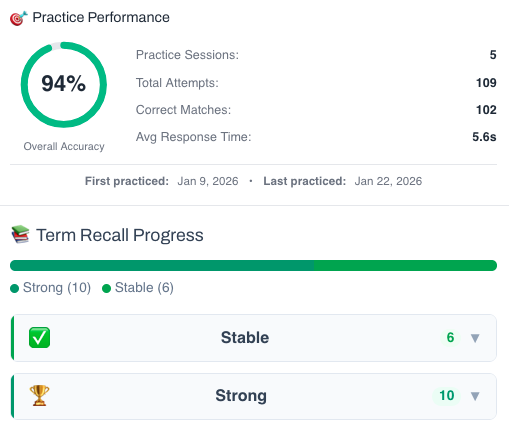
This isn’t a simple quiz — it’s a fully tracked learning system. You build knowledge through recognition, then recall, and your progress feeds directly into the Integrated Practice Bar (Writing tasks, AI Chat, and more).
- Practice sessions, accuracy, and response-time tracking
- Term strength levels (Learning → Stable → Strong)
- Personal progress history for each unit
This feature is available to YSP members.
Explore Membership Benefits🎮 Practice Games
Sentence Scrambler
Non-Literal Phrasal Verbs: Common Figurative Meanings – Sentence Scramble
Member-Exclusive Sentence Builder
Reconstruct scrambled sentences to practice word order and develop your grammar intuition.
This feature is available to YSP members.
Explore Membership Benefits