Prepositions + -ing Forms
Core PathWay
1 Why -ing After Prepositions?
English has a fixed rule. When a verb comes after a preposition, the verb must take the -ing form. This is true for ALL prepositions. There are no exceptions.
Many learners want to use the infinitive (to + verb). This feels natural in other languages. For example, in Italian you say ‘bravo a suonare’ (good at to play). But in English, we say ‘good at playing‘, not ‘good at to play’. The infinitive form is wrong after prepositions.
This rule works for all situations. It works when you talk about skills and hobbies. It works when you talk about your daily routine. It works with time words like before and after. You will see this pattern everywhere in English. Let’s learn how to use it correctly.
Key Terms
2 The Grammar Rule
This grammar rule is simple but very important. After any preposition, the verb must be in the -ing form. The -ing form acts like a noun in the sentence. This is why we use it after prepositions.
You will see this pattern in three main situations. First, with adjectives and prepositions (good at, interested in). Second, with verbs and prepositions (think about, dream of). Third, with time prepositions (before, after, without).
Focus
- Adjective + preposition + -ing: good at cooking, interested in learning, tired of waiting
- Verb + preposition + -ing: think about going, dream of traveling, talk about starting
- Time prepositions + -ing: before leaving, after eating, without waking up
Rules
- After ANY preposition, the verb MUST take the -ing form
- Never use the infinitive (to + verb) after a preposition
- This rule has NO exceptions in English
Examples
- I’m good at cooking Italian food. (adjective + preposition + -ing)
- She’s thinking about going to the gym. (verb + preposition + -ing)
- I always have coffee after waking up. (time preposition + -ing)
Common mistake
Key Terms
3 Two Friends Talk
Sam and Jordan are having coffee. They are talking about their lives.
‘I’m really good at cooking,’ Sam says. ‘I love trying new recipes. I’m also interested in learning to play the guitar. I found a teacher near my house. I’m thinking about going to classes twice a week.’
Jordan smiles. ‘That sounds great! I need to get more exercise. I’m tired of sitting at my desk all day. I’m thinking about joining a gym.’
‘What about your morning routine?’ Sam asks. ‘Do you have time for exercise?’
Jordan laughs. ‘My morning is crazy! After waking up, I only have 30 minutes before leaving for work. I usually rush. I’m bad at getting ready quickly. Sometimes I leave the house without eating breakfast. It’s not good, I know.’
‘Maybe try waking up earlier?’ Sam suggests. ‘I started doing that. After finishing my coffee, I have time to relax. It’s much better than rushing.’
‘You’re right,’ Jordan says. ‘I need to change my habits. I’m interested in starting a healthier routine. Maybe I’ll join that gym after finishing this project at work.’
Sam nods. ‘Good idea. We could go together! I’m good at practicing regularly. I can help you stay motivated.’
‘Perfect!’ Jordan says. ‘I’m looking forward to it. I’m serious about getting fit this time.’
Key Terms
4 Write About You
Now use what you learned. Write about your own life.
5 Remember the Rule
Let’s recap the golden rule. After a preposition, the verb ALWAYS takes the -ing form. There are no exceptions to this rule in English.
Here are common prepositions that need -ing forms: at (good at doing), in (interested in learning), about (think about going), before (before leaving), after (after eating), without (without having), by (by practicing), for (thank you for helping), of (tired of waiting).
The decision rule is simple. If you see a preposition followed by a verb, add -ing to the verb. Never use the infinitive.
Start noticing this pattern when you read or listen to English. You will see it everywhere. Good luck with your learning!
Member-Exclusive Practice Bar
Access a wide range of integrated practice for this unit — from Vocabulary and Grammar activities to AI-curated Writing tasks and Thematic Chat practice.
This feature is available to YSP members.
Explore Membership BenefitsMember-Exclusive Vocabulary Review & Acquisition System
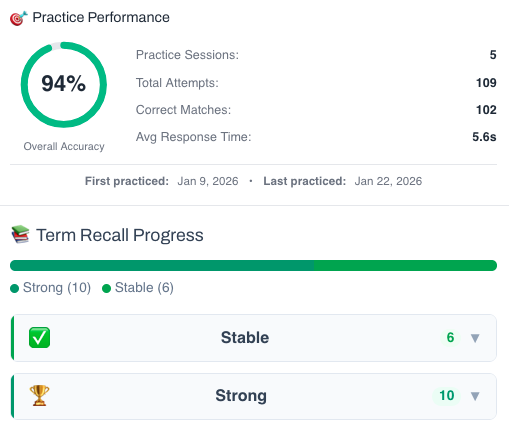
This isn’t a simple quiz — it’s a fully tracked learning system. You build knowledge through recognition, then recall, and your progress feeds directly into the Integrated Practice Bar (Writing tasks, AI Chat, and more).
- Practice sessions, accuracy, and response-time tracking
- Term strength levels (Learning → Stable → Strong)
- Personal progress history for each unit
This feature is available to YSP members.
Explore Membership Benefits🎮 Practice Games
Sentence Scrambler
Prepositions + -ing Forms – Sentence Scramble
Member-Exclusive Sentence Builder
Reconstruct scrambled sentences to practice word order and develop your grammar intuition.
This feature is available to YSP members.
Explore Membership Benefits