Prepositions of Movement: to, from, into, out of
Core PathWay
1 Movement vs Location: Why It Matters
English uses different words for location and movement. This is very important!
Think about your morning routine. You wake up. Where are you? You are in bed. Then you move. You get out of bed. You walk to the bathroom. You go into the bathroom. Can you see the pattern? When you are already somewhere, you use in. When you move and enter somewhere, you use into.
This small difference changes the meaning. ‘I am in the kitchen’ means you are there now. ‘I go into the kitchen’ means you are moving and entering. Many learners use ‘in’ for everything. This sounds wrong to English speakers. Let’s look at the correct patterns for describing movement through your home, your building, your office, and your daily journeys.
Key Terms
2 The Four Movement Prepositions
We use four main prepositions to talk about physical movement. Each one has a different job.
To shows destination — where you are going. From shows origin — where you started. Into shows entering an enclosed space. Out of shows exiting an enclosed space. These prepositions work with verbs of movement like go, walk, run, drive, and get. Let’s see exactly how to use each one correctly.
Focus
- The critical distinction: in = location inside / into = movement entering
- to + destination (where you are going)
- from + origin (where you started)
- out of + enclosed space (when exiting)
Rules
- Use TO to show destination: I walk to the kitchen. She drives to work. We go to the station. TO answers the question ‘where are you going?’
- Use FROM to show origin: I come from home. The train arrives from London. He walks from the bedroom to the living room. FROM answers the question ‘where did you start?’
- Use INTO when you enter an enclosed space: I go into the bathroom. She gets into the car. They walk into the building. INTO shows movement from outside to inside.
- Use OUT OF when you exit an enclosed space: I get out of bed. He takes the milk out of the fridge. We walk out of the office. OUT OF shows movement from inside to outside.
- IMPORTANT: Use IN for location (no movement): I am in the kitchen. The milk is in the fridge. Use INTO for entering: I go into the kitchen. I put the milk into the fridge.
Examples
- I get out of bed at 7am. I go into the bathroom. I walk to the kitchen and take milk out of the fridge. Then I drive from home to the office.
- She gets into her car at the station. She drives to the city. She parks and walks into the building.
- We walk from the living room to the bedroom. We go into the bedroom and close the door.
Common mistake
Key Terms
3 A Busy Morning
My alarm rings at 6:30am. I open my eyes. I am in bed, but I need to get up. I get out of bed and walk to the bathroom. I go into the bathroom and have a quick shower.
After my shower, I walk from the bathroom to the bedroom. I get dressed. Then I go into the kitchen to make coffee. I open the fridge and take the milk out of the fridge. I make my coffee and drink it quickly.
I need to pack my bag for work. I go from the kitchen to the living room. I put my laptop into my bag. I check I have everything. Then I walk to the front door.
I leave my apartment and go out of the building. I walk to the bus stop. The bus arrives and I get into the bus. Twenty minutes later, I get out of the bus at the station. I walk to the platform and wait for my train.
The train arrives. I get into the train and find a seat. The train goes from the station to the city centre. When we arrive, I get out of the train. I walk from the station to my office building. I go into the building and take the lift to the fifth floor.
Finally, I walk to my desk. I take my laptop out of my bag. It’s 8:30am. My working day starts. Every morning is the same routine — from bed to desk, moving through all these spaces!
Key Terms
4 Your Turn: Describe Your Morning
Now describe your own morning routine. Use the movement prepositions you have learned.
5 Quick Decision Rule
Let’s recap the key difference. In = location inside (you are already there). Into = movement entering (you are going there now). Out of = movement exiting (you are leaving).
Here is a simple decision rule: If you are moving, use into or out of. If you are already there, use in. Look at the verb. Verbs of movement (go, walk, run, drive, get) tell you to check your preposition. Do you need into or out of?
Notice these common patterns. We say get into and get out of with vehicles: get into the car, get into the train, get out of the bus. We say go into and go out of with buildings and rooms: go into the office, go out of the building. We say walk to and walk from with destinations and origins: walk to work, walk from the station.
Start noticing these patterns when you read or listen to English. They appear everywhere in daily conversation!
⚖️ INTO vs IN
Member-Exclusive Practice Bar
Access a wide range of integrated practice for this unit — from Vocabulary and Grammar activities to AI-curated Writing tasks and Thematic Chat practice.
This feature is available to YSP members.
Explore Membership BenefitsMember-Exclusive Vocabulary Review & Acquisition System
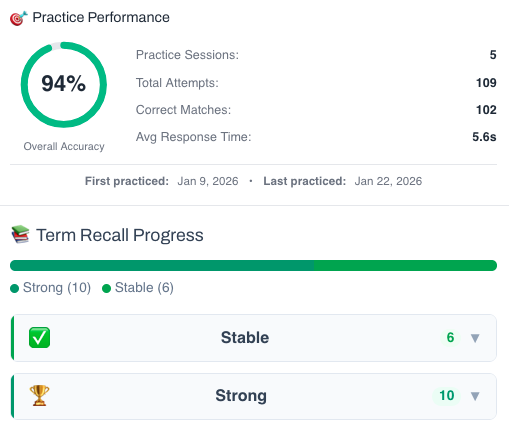
This isn’t a simple quiz — it’s a fully tracked learning system. You build knowledge through recognition, then recall, and your progress feeds directly into the Integrated Practice Bar (Writing tasks, AI Chat, and more).
- Practice sessions, accuracy, and response-time tracking
- Term strength levels (Learning → Stable → Strong)
- Personal progress history for each unit
This feature is available to YSP members.
Explore Membership Benefits🎮 Practice Games
Sentence Scrambler
Using prepositions to express direction, origin, entering, and exiting in concrete physical contexts – Sentence Scramble
Member-Exclusive Sentence Builder
Reconstruct scrambled sentences to practice word order and develop your grammar intuition.
This feature is available to YSP members.
Explore Membership Benefits