BY: Location, Method, and Deadlines
Core PathWay
1 One Word, Three Jobs
The word BY is very useful in English. It does three different jobs.
First, BY means ‘next to’ or ‘beside’. You can sit by the window or stand by the door. Second, BY tells us how we do something. You can travel by car, send a message by phone, or pay by credit card. Third, BY shows us a time limit. When you say ‘I need this by Friday‘, it means ‘not later than Friday’.
Today we look at all three meanings. We use a party story to see how BY works. When you organize an event, you need to think about where people sit, how you contact them, and when things must be ready. The word BY helps with all of these things. Many learners find BY difficult because it has different meanings. Let’s make it clear.
Key Terms
2 The Three Meanings of BY
BY is one small word, but it works in three very different ways. Understanding these three meanings helps you use BY correctly every time.
The first meaning is about position. The second meaning is about method. The third meaning is about time. Let’s look at each one with clear rules and examples from party planning.
Focus
- BY for location means ‘next to’ or ‘beside’
- BY for method shows how you do something
- BY for deadlines means ‘not later than’
Rules
- LOCATION: Use BY + place to say something is next to that place. Example: The cake is by the table. This means the cake is next to the table.
- METHOD/TRANSPORT: Use BY + noun (no article) to show how you do something. Example: I travel by car. I send invitations by email. You pay by credit card. Never say ‘by the car’ or ‘by a credit card’ for method.
- DEADLINES: Use BY + time to show the latest time something can happen. Example: Please confirm by Saturday. This means ‘confirm on Saturday or before Saturday, but not after Saturday’. BY is different from UNTIL. UNTIL means ‘continuing up to that time’. BY means ‘finished at that time or before’.
Examples
- LOCATION: Some guests want to sit by the window. The presents are by the door. Put the drinks table by the entrance.
- METHOD: I sent the invitation by email. She called the venue by phone. They paid the deposit by credit card. We organized everything by making a list.
- DEADLINES: We need to confirm numbers by Friday. The cake must arrive by 5pm. Please be ready by Saturday evening. All arrangements must be finished by the deadline.
Common mistake
Key Terms
3 The Surprise Party
Sam wanted to organize a surprise birthday party for her friend Alex. She had a lot to do, and she had to use the word BY many times!
First, Sam called the venue by phone. ‘We need a room for 30 people,’ she said. ‘Some guests want to sit by the window because the view is beautiful.’ The venue manager said, ‘That’s fine. But we need your payment by credit card today, and you must confirm final numbers by Friday.’
Next, Sam sent invitations. She sent most of them by email, but she called three people by phone because they don’t check email often. In every message, she wrote: ‘Please tell me if you can come by Thursday. The party is a surprise, so don’t tell Alex!’
Then Sam ordered the cake. She called the bakery by phone and said, ‘I need a chocolate cake for 30 people. Can you deliver it by Saturday at 5pm?’ The baker said yes.
On Friday, Sam checked her list. Most guests confirmed by email. Three people called her by phone. Everyone said yes! She sent a message to the venue: ‘We have 28 people. The arrangements are complete.’
On Saturday afternoon, Sam arrived at the venue early. She put the presents by the door. She put the drinks table by the window where the view was best. The cake arrived by 5pm, exactly on time. Everything was ready.
When Alex arrived at 6pm, everyone shouted ‘Surprise!’ Alex was so happy. Sam smiled. She organized everything by working hard and planning carefully. And she finished everything by the deadline. The party was a success!
Key Terms
4 Plan Your Event
Now you practise using BY in all three ways. Write a short plan for a small event.
5 Remember the Three Jobs
BY is a small word, but it works hard! Remember the three jobs it does.
First job: BY shows position. It means ‘next to’ or ‘beside’. The chair is by the table. I sit by the window. Second job: BY shows method. It tells you how something happens. I travel by car. I pay by credit card. I send a message by email. Remember: no article after BY for method! Don’t say ‘by the car’. Third job: BY shows a time limit. It means ‘not later than this time’. I need this by Friday. Be ready by 6pm. Finish the work by next week.
Here is a simple test: can you replace BY with ‘before’ or ‘not later than’? If yes, you are talking about a deadline. Use BY, not UNTIL. ‘I work until 5pm’ means I stop at 5pm. ‘I need this by 5pm’ means give it to me now or before 5pm.
Start noticing BY when you read or listen to English. You will see it everywhere! Each time, ask yourself: is this position, method, or deadline? This practice makes BY easy.
Member-Exclusive Practice Bar
Access a wide range of integrated practice for this unit — from Vocabulary and Grammar activities to AI-curated Writing tasks and Thematic Chat practice.
This feature is available to YSP members.
Explore Membership BenefitsMember-Exclusive Vocabulary Review & Acquisition System
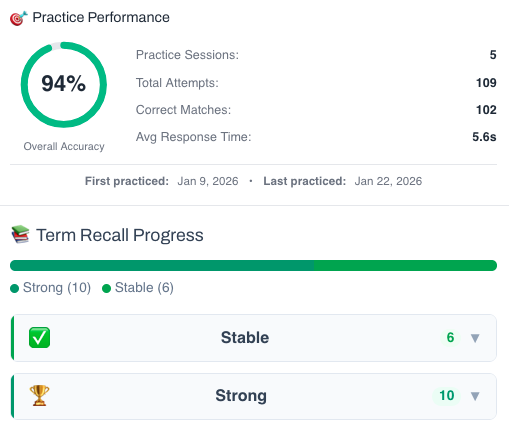
This isn’t a simple quiz — it’s a fully tracked learning system. You build knowledge through recognition, then recall, and your progress feeds directly into the Integrated Practice Bar (Writing tasks, AI Chat, and more).
- Practice sessions, accuracy, and response-time tracking
- Term strength levels (Learning → Stable → Strong)
- Personal progress history for each unit
This feature is available to YSP members.
Explore Membership Benefits🎮 Practice Games
Sentence Scrambler
The preposition BY in three core meanings: location, method/transport, and deadlines – Sentence Scramble
Member-Exclusive Sentence Builder
Reconstruct scrambled sentences to practice word order and develop your grammar intuition.
This feature is available to YSP members.
Explore Membership Benefits