The Language of Accountants: Core Vocabulary for Finance Work
Core PathWay
1 Section 1. What Accountants Do Every Day
Want to talk confidently about accounting? It starts with these words. Accountants work with money — but not in the way most people think. They do not just count cash. They look after the financial health of a business. One of their most important jobs is to record transactions. This means they write down every time money comes in or goes out of the business. They also manage accounts. This means they look after the financial records of a company or a client. Accountants need to track income and expenses too. Income is the money a business receives. Expenses are the costs it pays. By tracking both, accountants can see if a business is making money or losing it. Another key task is to process invoices. An invoice is a document that asks for payment. When a business receives an invoice, the accountant checks it and arranges payment. These four tasks — recording, managing, tracking, and processing — are the foundation of accounting work.
2 Section 2. Keeping the Numbers Accurate
Accuracy is everything in accounting. Even a small mistake can cause big problems. One important task is to reconcile bank accounts. This means checking that the numbers in the company’s records match the numbers in the bank. If they do not match, the accountant needs to find out why. Accountants also check financial records regularly. This means they look through documents and data to make sure everything is correct. A related task is to identify discrepancies. A discrepancy is a difference between two sets of numbers that should be the same. For example, if a bank statement shows £500 but the company’s records show £450, that is a discrepancy. Accountants also analyse financial data. This means they study numbers carefully to understand what they show about the business. Finally, they monitor cash flow. Cash flow means the movement of money into and out of a business. If more money is going out than coming in, the business could have a serious problem.
3 Section 3. Planning and Reporting
Accountants do not only look at what has already happened. They also help businesses plan for the future. One key task is to prepare budgets. A budget is a plan that shows how much money a business expects to spend and receive. Accountants also forecast costs. This means they make careful predictions about future expenses. For example, they might forecast that energy costs will rise next year. Another important task is to prepare financial statements. Financial statements are official documents that show the financial position of a business. They include information about income, expenses, and profit. Accountants also prepare reports for managers and clients. These reports explain the financial situation in a clear way. Good reports help managers make better decisions. Notice that ‘prepare’ is used with several accounting tasks — ‘prepare budgets’, ‘prepare reports’, ‘prepare financial statements’. This is a very natural collocation in accounting English.
4 Section 4. Taxes and Legal Responsibilities
Taxes are a big part of accounting work. Businesses must pay tax, and accountants help them do this correctly. One important task is to calculate taxes. This means working out exactly how much tax a business owes. It requires careful work with numbers and a good knowledge of tax rules. Accountants also file tax returns. A tax return is an official document that a business sends to the government. It shows how much money the business made and how much tax it should pay. Another key responsibility is to ensure legal compliance. This means making sure the business follows all the rules and laws about money and tax. If a business does not comply with the law, it could face serious penalties. Accountants also audit accounts. To audit means to do a detailed, official check of financial records. An audit checks that everything is correct and that the business has followed the rules. These tax and legal tasks are some of the most important things an accountant does.
5 Section 5. Working with People and Technology
Accounting is not just about numbers. It also involves working with people and using technology. Accountants often advise clients. This means they give professional advice to the people or businesses they work for. For example, they might advise a client on how to reduce their tax bill. They also communicate with auditors. Auditors are professionals who check financial records officially. Good communication between accountants and auditors helps the process go smoothly. Accountants must also handle confidential information. Confidential means private and secret. Financial data about a business or a person is always confidential. They also attend meetings with managers, clients, and other professionals. In these meetings, they explain financial information and answer questions. When it comes to technology, accountants use accounting software every day. Software like Xero or QuickBooks helps them manage data quickly and accurately. They also work with spreadsheets. A spreadsheet is a digital table used to organise and calculate numbers. Microsoft Excel is the most common example.
6 Section 6. The Accounting Workplace
Most accountants work in an office, either for a company or for an accounting firm. The office environment is usually professional and organised. Accountants often meet deadlines. A deadline is the last date or time when something must be finished. In accounting, deadlines are very important — especially for tax returns and financial reports. There is one time of year that is especially busy for accountants. At the end of the financial year, accountants work longer hours at year-end. Year-end is when a company closes its accounts for the year and prepares its final financial statements. This period can be very demanding. It is worth knowing that many accounting terms use the verb ‘prepare’ — but notice that accountants ‘file’ tax returns, not ‘prepare and send’ them. ‘File’ is the standard verb here. Similarly, accountants ‘meet’ deadlines — not ‘finish’ or ‘complete’ them. These collocations are the natural choices that professionals use, so it is worth learning them well.
Member-Exclusive Practice Bar
Access a wide range of integrated practice for this unit — from Vocabulary and Grammar activities to AI-curated Writing tasks and Thematic Chat practice.
This feature is available to YSP members.
Explore Membership BenefitsMember-Exclusive Vocabulary Review & Acquisition System
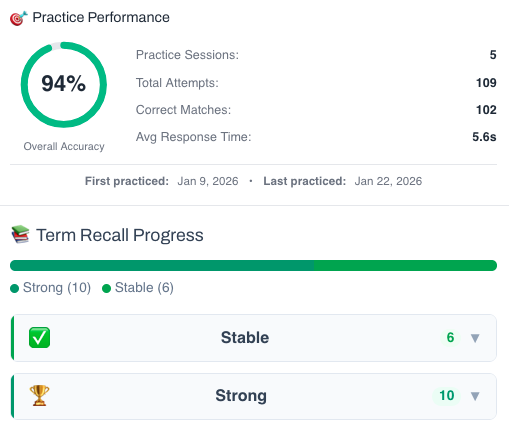
This isn’t a simple quiz — it’s a fully tracked learning system. You build knowledge through recognition, then recall, and your progress feeds directly into the Integrated Practice Bar (Writing tasks, AI Chat, and more).
- Practice sessions, accuracy, and response-time tracking
- Term strength levels (Learning → Stable → Strong)
- Personal progress history for each unit
This feature is available to YSP members.
Explore Membership Benefits