The Language of Firefighting: What Firefighters Do
Core PathWay
1 Section 1. The Core Mission: What Firefighters Are There to Do
Firefighting has its own language — let’s make sure you can use it. Firefighters have a very important job. Their main purpose is to respond to emergencies. This means they go quickly when there is a fire, an accident, or another dangerous situation. One of their most important tasks is to put out fires. This means they stop a fire from burning. Firefighters also rescue people. This means they help people who are in danger and cannot get out by themselves. When a building is on fire, firefighters must evacuate buildings. This means they make sure everyone leaves the building safely. These four actions — responding, putting out fires, rescuing people, and evacuating buildings — are at the heart of what firefighters do.
2 Section 2. Inside the Fire: Actions at the Scene
When firefighters arrive at a fire, they have to act fast. They often need to enter burning buildings. This is dangerous work, but it is necessary to help people inside. Once inside, they search for casualties. A casualty is a person who is hurt or who needs help. Firefighters are also trained to provide first aid. This means they give basic medical help to injured people before an ambulance arrives. To breathe safely in a smoke-filled building, firefighters use breathing apparatus. This is a special piece of equipment that gives them clean air. They also operate fire hoses to direct water at the fire. To reach high floors or windows, firefighters climb ladders. When a door is locked or blocked, they break down doors to get inside quickly.
3 Section 3. Beyond Fires: Other Emergency Work
Firefighters do not only fight fires. They are also called to road accidents. At these scenes, they control traffic at accident scenes to keep people safe. They also deal with road accidents directly — this means they help injured people and make the area safe. Another important part of the job is to handle hazardous materials. Hazardous materials are dangerous substances, such as chemicals or fuel, that can cause harm. This work needs special training and careful action. Firefighters are often the first people to arrive at many different types of emergency, so they need a wide range of skills.
4 Section 4. Keeping Buildings Safe: Inspection and Equipment
Firefighters also work to prevent fires before they start. They inspect buildings to check that they are safe. This means they visit places like schools, offices, and shops and look for fire risks. They also check fire safety equipment in these buildings. This means they test things like fire alarms, fire extinguishers, and emergency exits to make sure they work correctly. This part of the job is very important because it can stop fires from happening in the first place. Prevention is just as important as response.
5 Section 5. Life at the Station: Shifts, Training, and Equipment
Firefighters spend a lot of time at the fire station when they are not at an emergency. They work shifts. This means they work set hours — for example, a day shift or a night shift — and then another team takes over. At the station, firefighters maintain equipment. This means they clean, check, and repair their tools so everything is ready to use. They also train regularly. This means they practise their skills often so they do not forget them. To do this job, firefighters must be physically fit. This means they need to be strong and healthy because the work is very demanding. They also wear protective clothing to keep their bodies safe from heat and fire, and they always wear a helmet to protect their head. When there is an emergency, they drive a fire engine to the scene as quickly as possible. Their base is the fire station — the building where they live and work during their shift.
6 Section 6. Community Work: Education, Drills, and Public Safety
Firefighters also have an important role in the community. They educate the public about fire safety. This means they teach people — in schools, at events, or online — how to stay safe and what to do in a fire. They also carry out fire drills. A fire drill is a practise evacuation. It helps people learn what to do if there is a real fire. Notice the collocation here: we ‘carry out’ a drill — not ‘do’ or ‘make’ one. This is the natural partner for this phrase in English. All of this community work helps people understand fire risks and stay safer. Firefighters are not just emergency responders — they are also teachers and safety advisors in their local communities.
Member-Exclusive Practice Bar
Access a wide range of integrated practice for this unit — from Vocabulary and Grammar activities to AI-curated Writing tasks and Thematic Chat practice.
This feature is available to YSP members.
Explore Membership BenefitsMember-Exclusive Vocabulary Review & Acquisition System
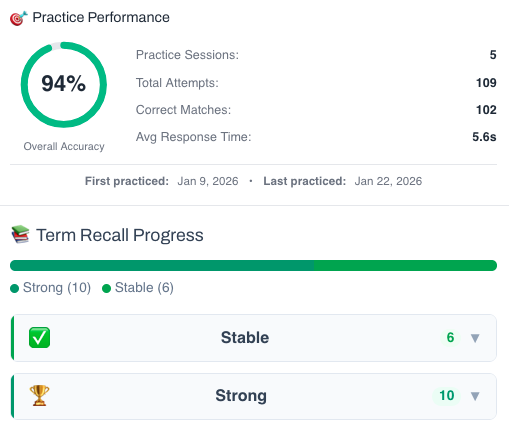
This isn’t a simple quiz — it’s a fully tracked learning system. You build knowledge through recognition, then recall, and your progress feeds directly into the Integrated Practice Bar (Writing tasks, AI Chat, and more).
- Practice sessions, accuracy, and response-time tracking
- Term strength levels (Learning → Stable → Strong)
- Personal progress history for each unit
This feature is available to YSP members.
Explore Membership Benefits🎮 Practice Games
Sentence Scrambler
Firefighters – Sentence Scramble
Member-Exclusive Sentence Builder
Reconstruct scrambled sentences to practice word order and develop your grammar intuition.
This feature is available to YSP members.
Explore Membership Benefits