The Language of the Hairdresser
Core PathWay
1 Section 1. Welcome to the Salon
Want to talk confidently about hairdressers? It starts with these words.
A hairdresser’s day begins before the first client walks through the door. Every morning, a hairdresser must prepare workstations. This means getting the chair, mirror, and tools ready for the day. A clean, tidy workstation helps the hairdresser work well and makes the client feel comfortable.
The first job with a client is to greet clients. This means saying hello and making the client feel welcome. A friendly greeting is very important in a salon. After this, the hairdresser will book appointments — or check the appointments that are already in the diary. This means planning when each client will come in.
Hairdressers also advise clients. This means giving helpful ideas about what style or colour might look good. A good hairdresser listens carefully and then gives clear suggestions. They also discuss hairstyles with clients. This means talking about different options — short, long, curly, straight — before any work begins.
2 Section 2. The Main Hair Services
Now let’s look at the main things a hairdresser does to a client’s hair.
The most basic service is to wash hair. This means cleaning the hair with shampoo and conditioner at the sink. After washing, the hairdresser will often cut hair. This means removing length from the hair using scissors. Sometimes a client only wants a small amount removed — in that case, the hairdresser will trim hair. This means cutting just a little bit, to keep the style neat.
Many clients also want their hair to look a certain way after the cut. To do this, the hairdresser will style hair. This means shaping and finishing the hair so it looks its best. A very popular way to finish a style is to blow-dry hair. This means using hot air from a machine to dry and shape the hair at the same time.
Some clients want a completely different look. They might ask the hairdresser to straighten hair — this means making curly or wavy hair smooth and flat. Others want the opposite: to curl hair, which means adding waves or curls to straight hair. For a special occasion, a hairdresser might put hair up, which means styling the hair so it sits on top of or behind the head.
3 Section 3. Colour Services
Colour is one of the most popular services in a salon. Let’s look at the key terms.
The most complete change is to colour hair. This means changing the colour of all or most of the hair using a special product. A common reason people visit the salon is to dye roots. This means colouring only the part of the hair closest to the head, where new hair has grown in a different colour.
Another popular service is to add highlights. This means colouring small sections of hair a lighter colour than the rest, to give the hair a brighter, more varied look.
Before any colour service, the hairdresser must mix hair colour. This means combining different products together to make the exact shade the client wants. Getting the mix right is very important — the wrong colour can be very difficult to fix.
4 Section 4. Tools of the Trade
A hairdresser uses different tools for different jobs. Here are the most important ones.
To cut hair, a hairdresser will use scissors. Scissors are the most important tool in the salon. They must be sharp and clean. For very short styles — especially around the sides and back of the head — the hairdresser will use clippers. Clippers are electric tools that cut hair very close to the skin.
After washing or styling, the hairdresser will often use a hairdryer. A hairdryer blows hot air to dry the hair quickly and help shape the style.
Hairdressers also give hair treatments. This means applying special products that help keep the hair healthy and strong. Treatments are especially useful for dry or damaged hair.
To protect their clothes from colour and chemicals, hairdressers wear an apron. This means putting on a special cover over their clothes before they start work.
5 Section 5. Keeping the Salon Clean
A clean salon is a safe and professional salon. Hairdressers spend time every day keeping things tidy.
After every client, a hairdresser must clean equipment. This means washing and disinfecting the tools they used, such as scissors, combs, and clippers. Clean equipment is important for the health of every client.
Hair falls on the floor during every cut, so hairdressers regularly sweep the floor. This means using a brush and dustpan to collect the hair and keep the floor tidy.
Hairdressers also manage products. This means keeping track of the shampoos, conditioners, colours, and treatments in the salon — making sure there is always enough and that nothing runs out.
6 Section 6. The Physical Side of the Job
Hairdressing is not just about skill with hair — it is also a physically demanding job.
One important thing to know is that hairdressers stand for long periods. This means they are on their feet for most of the working day, often six to eight hours or more. This can be tiring, so good shoes and short breaks are very helpful.
Hairdressers are always busy — greeting clients, preparing workstations, mixing hair colour, and completing services one after another. It is a job that needs both physical energy and good communication skills.
Now you know the key vocabulary of the hairdressing world. These are the words that describe a real working day — from the moment the salon opens to the moment the floor is swept clean.
Member-Exclusive Practice Bar
Access a wide range of integrated practice for this unit — from Vocabulary and Grammar activities to AI-curated Writing tasks and Thematic Chat practice.
This feature is available to YSP members.
Explore Membership BenefitsMember-Exclusive Vocabulary Review & Acquisition System
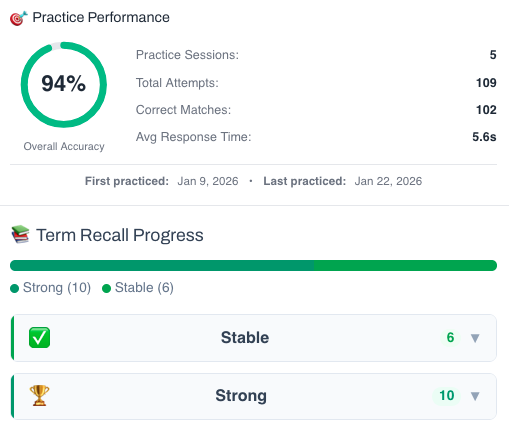
This isn’t a simple quiz — it’s a fully tracked learning system. You build knowledge through recognition, then recall, and your progress feeds directly into the Integrated Practice Bar (Writing tasks, AI Chat, and more).
- Practice sessions, accuracy, and response-time tracking
- Term strength levels (Learning → Stable → Strong)
- Personal progress history for each unit
This feature is available to YSP members.
Explore Membership Benefits