The Language of Teaching: What Teachers Do Every Day
Core PathWay
1 Section 1. Welcome to the World of Teaching
Want to talk confidently about teachers and what they do? It starts with these words. Teaching is a busy job with many different tasks. Some tasks happen inside the classroom. Others happen outside the classroom. We can group a teacher’s work into four main areas: planning, teaching, supporting learners, and professional duties. In this section, we look at the first two areas. A teacher’s day begins before the students arrive. Every teacher needs to plan lessons. This means deciding what to teach and how to teach it. Teachers also need to prepare materials. This means getting ready the things students will use in class — for example, worksheets, slides, or activities. Before the school term begins, teachers also work to a timetable. This means they follow a fixed weekly schedule that shows when and where each class happens.
2 Section 2. Inside the Classroom — Teaching and Instruction
Once the lesson starts, the teacher’s main job is to teach classes. This means standing in front of students and helping them learn new things. One important skill is to explain concepts. A concept is an idea or topic. When a teacher explains a concept, they make it clear and easy to understand. Teachers also need to give instructions. This means telling students exactly what to do — for example, ‘Open your books to page 12’ or ‘Work in pairs.’ A good teacher also asks questions to check that students understand. And when students have questions, the teacher answers questions clearly and patiently. In many classrooms, teachers use a whiteboard to write key words, draw diagrams, or show examples. Many teachers also use digital resources — this means using computers, tablets, or online tools to support the lesson.
3 Section 3. Managing the Classroom
Teaching is not only about explaining things. Teachers also need to manage the classroom. This means keeping the class organised and running smoothly. Part of this is to maintain discipline. Discipline means good behaviour. When a teacher maintains discipline, they make sure students follow the rules and stay focused. Teachers also need to supervise students. This means watching students carefully to make sure they are safe and working well. Good classroom management helps everyone learn better. Notice how these three phrases all describe control and order: manage the classroom, maintain discipline, supervise students. They are related, but each one focuses on something slightly different. Managing is about organisation. Discipline is about behaviour. Supervising is about watching and keeping students safe.
4 Section 4. Supporting and Motivating Learners
A great teacher does more than just explain things. They also care about how students feel and how they are doing. Teachers support learners — this means helping students who are struggling or who need extra help. Teachers also try to motivate students. To motivate someone means to encourage them and make them want to try hard. These two phrases go together well: support and motivate. Support is about practical help. Motivation is about energy and enthusiasm. Teachers also assess progress. This means checking how much a student has learned over time. It is not just about test scores — it is about understanding where each student is in their learning journey. To help students improve, teachers give feedback. Feedback means telling a student what they did well and what they can do better. Teachers also correct mistakes — they show students where they went wrong and explain the right answer.
5 Section 5. Homework and Assessment
Homework is an important part of learning. Teachers set homework — this means they give students work to do at home after the lesson. When students hand in their homework, the teacher needs to mark homework. To mark homework means to read it, check the answers, and give a score or comments. After marking, teachers often give feedback again — written notes that help the student understand their mistakes. Teachers also keep records. This means writing down information about each student — for example, their attendance, their grades, and their progress. Good records help teachers and schools understand how well students are doing. Notice the pattern: set homework → students do homework → mark homework → give feedback → keep records. This is a natural sequence that repeats every week in most schools.
6 Section 6. The Teacher Beyond the Classroom
Teaching does not stop when the lesson ends. Teachers have many professional duties outside the classroom. They meet parents — this means talking with a student’s family about how the student is doing at school. Teachers also attend staff meetings. A staff meeting is when all the teachers in a school come together to discuss important topics. Teachers must also wear professional clothes — this means dressing in a way that is suitable and smart for a workplace. Most teachers work during term time. Term time is the part of the school year when classes are happening. During holidays, teachers often spend time preparing lessons for the next term. This is an important phrase — it shows that preparation is a big part of a teacher’s job, even when students are not in school. So, a teacher’s work is never really finished!
Member-Exclusive Practice Bar
Access a wide range of integrated practice for this unit — from Vocabulary and Grammar activities to AI-curated Writing tasks and Thematic Chat practice.
This feature is available to YSP members.
Explore Membership BenefitsMember-Exclusive Vocabulary Review & Acquisition System
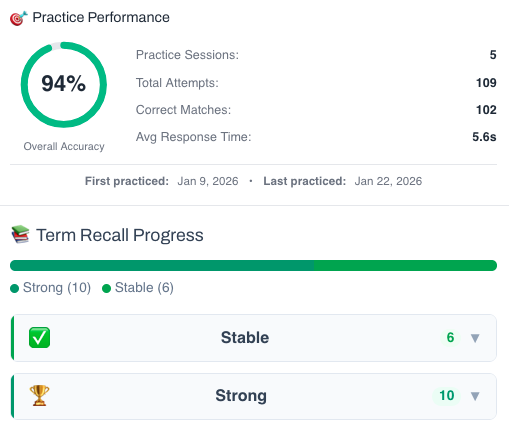
This isn’t a simple quiz — it’s a fully tracked learning system. You build knowledge through recognition, then recall, and your progress feeds directly into the Integrated Practice Bar (Writing tasks, AI Chat, and more).
- Practice sessions, accuracy, and response-time tracking
- Term strength levels (Learning → Stable → Strong)
- Personal progress history for each unit
This feature is available to YSP members.
Explore Membership Benefits🎮 Practice Games
Sentence Scrambler
Teachers – Sentence Scramble
Member-Exclusive Sentence Builder
Reconstruct scrambled sentences to practice word order and develop your grammar intuition.
This feature is available to YSP members.
Explore Membership Benefits