The Language of Bus Drivers: Duties, Responsibilities, and Routines
Core PathWay
1 Section 1. On the Road: Routes and Timetables
Want to talk confidently about bus drivers and their work? It starts with these words.
Bus drivers have a very clear job. They travel the same roads every day. We call this a route. A route is the set path a bus takes from one place to another. Bus drivers follow a route — this means they drive along the correct roads in the correct order. They do not choose their own way.
Bus drivers also keep to a timetable. A timetable is a list of times. It shows when the bus should arrive and leave each stop. ‘Keep to’ means to stay within the rules or plan. So ‘keep to a timetable’ means the driver tries to arrive and leave at the right times. If the bus is late, the driver has to report delays. This means they tell someone — usually the control centre — that the bus is running late.
Bus drivers often drive long distances. Some routes are short, but others go across a whole city or between towns. Driving long distances means the driver is on the road for many hours. This is a normal part of the job.
These three ideas — the route, the timetable, and the distance — are the basic shape of a bus driver’s working day.
2 Section 2. At the Stop: Picking Up and Dropping Off
A bus does not just drive. It stops. And stopping is actually a big part of the job.
When people get on the bus, the driver picks up passengers. ‘Pick up’ here means to collect people and take them with you. When people get off the bus, the driver drops off passengers. ‘Drop off’ means to leave people at a place. These two phrasal verbs are very common in transport English.
Buses stop at different places. City buses stop at bus stops — these are the marked places on the road where passengers wait. Trains and some trams stop at stations — these are larger buildings where people wait and buy tickets.
At each stop, the driver must open and close the doors. This sounds simple, but it is an important safety action. The driver opens the doors so passengers can get on or off. Then the driver closes the doors before moving again. The doors must be fully closed before the bus moves.
Notice how we use these verbs: we ‘pick up’ and ‘drop off’ passengers, but we ‘open and close’ doors. English likes these natural verb partnerships — and so do bus drivers.
3 Section 3. Tickets and Information: Serving Passengers
Bus drivers do more than drive. They also work with passengers directly.
On some buses, the driver sells tickets. This means the passenger pays the driver and gets a ticket to travel. On other buses, passengers already have a ticket or a travel card. In that case, the driver checks tickets. This means the driver looks at the ticket to make sure it is valid. ‘Valid’ means it is correct and can be used for this journey.
Drivers also make announcements. An announcement is a message for everyone to hear. For example, a driver might say: ‘The next stop is Central Station’ or ‘This bus is running five minutes late.’ Announcements help passengers know what is happening.
Drivers answer travel questions too. Passengers often ask things like ‘Does this bus go to the airport?’ or ‘How many stops to the market?’ The driver answers these questions to help people travel correctly.
In general, drivers help passengers in many small ways. They might explain the route, point to the right seat, or tell someone when to get off. This is part of good customer service — and it makes a big difference to passengers who are new to the area.
4 Section 4. Safety and Accessibility: Looking After Everyone
A bus driver is responsible for everyone on the bus. Safety is a top priority.
One important duty is to assist disabled passengers. ‘Assist’ means to help. Disabled passengers may need extra help getting on or off the bus, finding a seat, or using the ramp. Good drivers do this calmly and patiently.
Drivers also keep passengers safe at all times. This means driving carefully, not going too fast, and making sure everyone is seated or holding on before the bus moves. Keeping passengers safe is not just one action — it is a constant responsibility.
Drivers must obey traffic regulations. Regulations are official rules. Traffic regulations include things like speed limits, traffic lights, and road signs. ‘Obey’ means to follow the rules correctly. A driver who does not obey traffic regulations puts everyone in danger.
Drivers also check mirrors regularly. Mirrors help the driver see what is happening around and behind the bus. Checking mirrors is a basic safety habit that good drivers do all the time.
Drivers must also monitor signals. Signals are lights or signs that give the driver information — for example, traffic lights or signals at level crossings. ‘Monitor’ means to watch carefully and respond when needed.
All of these actions work together. They help the driver keep control and keep everyone on board safe.
5 Section 5. Controls and Checks: Operating the Vehicle
Before and during a journey, bus drivers have technical duties too.
Drivers operate vehicle controls. This means they use the equipment inside the bus — the steering wheel, the brakes, the accelerator, and other systems. Every driver must know how to use these controls correctly.
Before starting a shift, drivers carry out safety checks. ‘Carry out’ means to do or complete a task. Safety checks include looking at the tyres, the lights, the brakes, and the doors. These checks make sure the bus is safe to drive. If something is wrong, the driver must report it before the journey begins.
Drivers also contact the control centre when they need help or need to share information. The control centre is the office that manages all the buses on the network. A driver might contact the control centre to report a delay, a problem with the vehicle, or an incident on the bus.
If something serious happens, the driver must deal with emergencies. An emergency is a sudden, dangerous situation. For example, a passenger might feel very unwell, or there might be an accident. The driver must stay calm, follow the correct procedure, and contact the control centre immediately.
These technical and operational duties are just as important as driving itself. A well-prepared driver is a safe driver.
6 Section 6. The Working Life: Uniforms, Shifts, and Conditions
Let’s look at what a bus driver’s working life is actually like.
Most bus drivers wear a uniform. A uniform is a set of clothes that all workers in the same job wear. It usually includes a jacket, trousers, and a cap. The uniform helps passengers recognise the driver and shows the driver is a professional.
Bus drivers work shifts. A shift is a fixed period of work — for example, from 6am to 2pm, or from 2pm to 10pm. Different drivers work different shifts so that buses can run all day and evening. Shift work means the driver’s start and finish times change from week to week.
Drivers often work weekends. Public transport runs every day, including Saturdays and Sundays. So bus drivers cannot always have weekends free. Working weekends is a normal part of the job for most drivers.
Putting it all together: a bus driver follows a route, keeps to a timetable, picks up and drops off passengers, checks tickets, makes announcements, assists disabled passengers, operates vehicle controls, carries out safety checks, and keeps everyone safe — all while wearing a uniform and working shifts.
That is a lot of responsibility. And now you have the language to talk about all of it.
Member-Exclusive Practice Bar
Access a wide range of integrated practice for this unit — from Vocabulary and Grammar activities to AI-curated Writing tasks and Thematic Chat practice.
This feature is available to YSP members.
Explore Membership BenefitsMember-Exclusive Vocabulary Review & Acquisition System
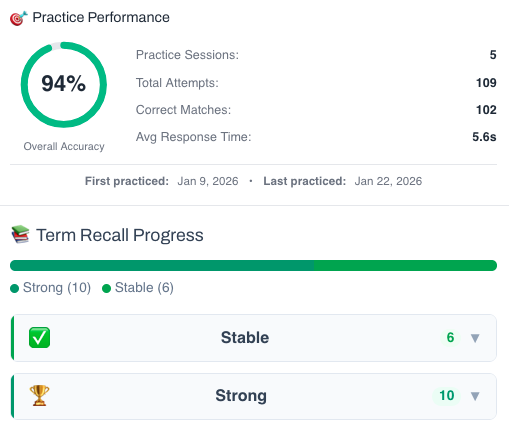
This isn’t a simple quiz — it’s a fully tracked learning system. You build knowledge through recognition, then recall, and your progress feeds directly into the Integrated Practice Bar (Writing tasks, AI Chat, and more).
- Practice sessions, accuracy, and response-time tracking
- Term strength levels (Learning → Stable → Strong)
- Personal progress history for each unit
This feature is available to YSP members.
Explore Membership Benefits