The Language of Lawyers: Essential Legal Vocabulary
Core PathWay
1 Section 1. Lawyers and the People They Help
Want to talk confidently about the legal world? It starts with these words.
A lawyer is a person whose job is to help people understand and use the law. Lawyers also speak for people in official situations. This is called to represent someone. In other words, the lawyer speaks and acts officially on behalf of another person.
The person a lawyer helps is called a client. A client pays the lawyer for their help. The money a client pays is called a fee. Lawyer fees can be very high, so many people use a law firm. A law firm is a company where a group of lawyers work together. Clients can choose the right lawyer for their problem from the firm.
Lawyers do not just work in courts. They also advise clients. This means they give professional guidance about what a client should do in a legal situation. For example, a lawyer might advise a client about their rights. Rights are the things a person is officially and legally allowed to do or have. The law protects these rights.
One important thing a lawyer can help with is a contract. A contract is a written agreement between two or more people or companies. It is legally binding, which means everyone must follow it. Lawyers check contracts carefully to protect their clients.
2 Section 2. Cases, Courts, and Judges
When a lawyer is working on a legal problem for a client, this problem is called a case. A lawyer might work on many different cases at the same time.
Some cases go to a court. A court is the official place where legal decisions are made. It is a formal and serious place. The person in charge of a court is called a judge. The judge listens to all the facts of a case and makes the official legal decision.
Not every case goes to court. Sometimes the two sides agree on a settlement. A settlement is an agreement — usually involving money — that stops the case from going to court. Settlements save time and money for everyone.
If a case does go to court, there is a formal process called a trial. During a trial, the judge — and sometimes a group of ordinary people — decides if someone is guilty of a crime. The trial follows strict rules. Both sides have a chance to speak.
3 Section 3. Charges, Evidence, and Witnesses
Before a trial begins, the police or the court must make a charge. A charge is an official statement that says a person is accused of a specific crime. For example, a person might face a charge of theft or fraud.
During the trial, both sides use evidence. Evidence includes information, documents, or objects that help prove whether something is true or false. Good evidence is very important. Without strong evidence, it is hard to win a case.
Another important part of a trial is the witness. A witness is a person who goes to court to answer questions. They tell the court what they saw, heard, or know about the case. A witness must tell the truth in court.
Lawyers also have the right to sue someone. To sue means to officially take a person or organisation to court because you believe they have done something wrong that has harmed you. For example, if a company breaks a contract, a client might decide to sue them.
4 Section 4. Defend, Prosecute, and Represent
In a criminal trial, there are two main sides. One side tries to defend the person accused of a crime. To defend means to speak and argue in court to show that the person is not guilty or should not be punished. The lawyer who does this is called a defence lawyer.
The other side tries to prosecute. To prosecute means to argue in court that the accused person is guilty and should be punished. The lawyer who does this works for the state or government.
Both sides represent their clients during the trial. Remember — to represent means to speak and act officially on behalf of someone. This is one of the most important jobs a lawyer does.
The word legal is also very useful here. Legal describes something that is connected to or allowed by the law. For example, a lawyer gives legal advice. A court makes legal decisions. You will see the word legal used very often in this topic.
5 Section 5. Verdicts, Sentences, and Appeals
At the end of a trial, the court makes an official decision. This decision is called the verdict. The verdict says whether the person is guilty or innocent. Guilty means the court has officially decided that the person did something wrong or illegal. Innocent means the court has officially decided that the person did NOT do the wrong thing they were accused of.
If the verdict is guilty, the court then gives a sentence. A sentence is the official punishment. It could be time in prison, a fine, or another form of punishment. The judge decides the sentence.
Sometimes a person believes the verdict or the sentence was wrong. In that case, they can make an appeal. An appeal is a formal request to a higher court to look at the case again. The person making the appeal believes the first decision was a mistake. Appeals can take a long time and are not always successful.
6 Section 6. Putting It All Together
Now you have all the key vocabulary for this topic. Let’s see how these words connect.
A lawyer works at a law firm and takes on a case for a client. The lawyer charges a fee for their services. They advise the client about their rights and check any contract involved.
If the case goes to court, the lawyer will represent the client. One side will defend the accused person. The other side will prosecute. A judge runs the trial. Both sides use evidence and call witness statements.
The police may have already made a charge against the person. At the end, the court gives a verdict — guilty or innocent. If guilty, the judge gives a sentence. If the result seems unfair, the client can make an appeal.
Sometimes a settlement is reached before the trial. And if someone has been harmed, they might choose to sue the other party. This is the world of legal work — and now you have the language to talk about it.
Member-Exclusive Practice Bar
Access a wide range of integrated practice for this unit — from Vocabulary and Grammar activities to AI-curated Writing tasks and Thematic Chat practice.
This feature is available to YSP members.
Explore Membership BenefitsMember-Exclusive Vocabulary Review & Acquisition System
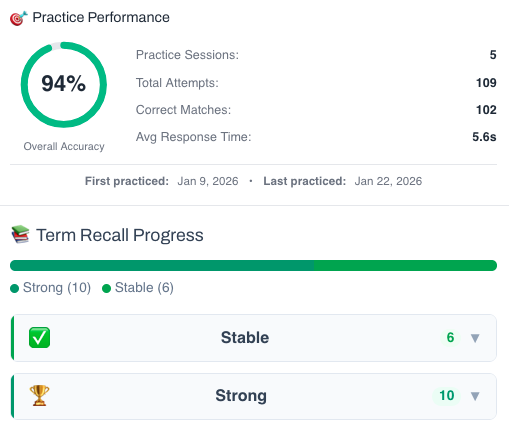
This isn’t a simple quiz — it’s a fully tracked learning system. You build knowledge through recognition, then recall, and your progress feeds directly into the Integrated Practice Bar (Writing tasks, AI Chat, and more).
- Practice sessions, accuracy, and response-time tracking
- Term strength levels (Learning → Stable → Strong)
- Personal progress history for each unit
This feature is available to YSP members.
Explore Membership Benefits