The Language of Building: Essential Vocabulary for Builders
Core PathWay
1 Section 1. Before the Building Starts
Ready to build your vocabulary for the construction site? Here is where we start.
Every building project begins with planning. A builder must read building plans. This means looking at detailed drawings that show exactly what the finished building will look like and how it should be built.
Before any building work can happen, workers must prepare the site. This means clearing the land and making it safe and ready for construction.
One of the first physical jobs is to dig foundations. Foundations are deep holes or trenches in the ground. They support the weight of the whole building, so this step is very important.
Builders also need to erect scaffolding early in the project. To erect means to put up or build something. Scaffolding is a temporary metal frame around a building. It gives workers a safe platform to stand on when they work at height.
Notice how builders use the verb ‘erect’ specifically for scaffolding — this is a strong collocation. You would not normally say ‘make scaffolding’ or ‘build scaffolding’ in professional English.
2 Section 2. Working with Materials
Once the site is ready, builders start working with materials. First, they measure materials. This means checking the size, length, or quantity of materials before using them. Getting measurements right is essential — a small mistake can cause big problems later.
Builders often need to mix cement. Cement is a grey powder that is mixed with water and sand to make a strong paste. This paste holds bricks and stones together.
To build walls, workers lay bricks. This means placing bricks in rows, one on top of another, with cement between them.
For floors and large flat areas, builders pour concrete. Concrete is a very strong material made from cement, sand, gravel, and water. Workers pour it as a liquid and it sets hard.
Builders also install insulation. Insulation is a material that keeps heat inside a building. It is placed inside walls and ceilings. The verb ‘install’ is useful here — it means to put something in place so it is ready to use.
Then workers build walls to create the structure of the building. At this stage, the shape of the building really starts to appear.
3 Section 3. Finishing the Structure
After the main structure is up, builders move on to finishing work. They fit doors and windows. To fit means to put something into the correct position so it works properly. Doors and windows must be fitted carefully so they open, close, and seal correctly.
Builders then plaster walls. Plaster is a smooth, white material that is spread over brick or concrete walls. It dries hard and gives walls a clean, flat surface ready for painting.
Sometimes older buildings need attention too. Builders are often called to repair structures. This means fixing parts of a building that are damaged or broken.
At any point in the project, workers need to check levels and measurements. A ‘level’ is a tool that shows whether a surface is perfectly flat or a wall is perfectly straight. Checking measurements means making sure all sizes are correct. Both tasks help builders avoid costly mistakes.
Notice the pattern: ‘check’ + noun is very common in builder’s English — ‘check levels’, ‘check measurements’, ‘check progress’. The verb ‘check’ means to look at something carefully to make sure it is correct.
4 Section 4. Tools and Equipment
Builders use many different tools every day. Some tools are powered by electricity or compressed air. When a builder uses these, we say they operate power tools. To operate means to control and use a machine or tool correctly. Examples include drills, saws, and nail guns.
Other tools are simpler and worked by hand. When builders use hand tools, they are using items like hammers, chisels, tape measures, and spirit levels. These tools do not need electricity.
Builders also need to move heavy things around the site. They regularly carry heavy materials such as bricks, timber, and bags of cement. This is physically demanding work.
At the start and end of each day, workers load and unload supplies. This means putting materials onto or taking them off a vehicle such as a van or lorry. ‘Load’ means to put things on. ‘Unload’ means to take things off.
The verb pattern here is worth noticing: ‘operate’ goes with machines and tools, while ‘use’ goes with simpler tools. Native speakers rarely say ‘operate a hammer’ — they say ‘use a hammer’.
5 Section 5. Safety on Site
Construction sites can be dangerous places. That is why safety rules are so important. All workers must follow safety regulations. Regulations are official rules that everyone must obey. On a building site, these rules protect workers from injury.
One of the most important rules is to wear a hard hat. A hard hat is a strong plastic helmet that protects a worker’s head from falling objects. You will see hard hats on every professional building site.
Workers must also wear high-visibility clothing. High-visibility means easy to see. This clothing — usually a bright yellow or orange jacket — helps other workers and vehicle drivers see you clearly, especially in busy or low-light conditions.
Many builders work at height. This means working on scaffolding, ladders, or roofs above the ground. Special safety rules apply when working at height because falls are one of the most common causes of serious injury on construction sites.
Builders also frequently work outdoors in all weather conditions. Rain, cold, and strong sun are all part of the job. Good protective clothing is essential for staying safe and comfortable outside.
6 Section 6. Working with Others and Managing the Project
Building is a team effort. Builders do not work alone — they work alongside electricians, plumbers, carpenters, and other specialists. To make the project run smoothly, builders must coordinate with other trades. A ‘trade’ is a skilled job that requires specific training, such as plumbing or electrical work. To coordinate means to organise work so that different teams do their jobs at the right time and in the right order.
At the end of each working day, workers clean the site. A tidy site is a safer site. Removing waste, tools, and loose materials reduces the risk of accidents.
Every project has a deadline. Builders must meet construction deadlines. A deadline is the date by which work must be finished. To meet a deadline means to finish on time. Missing deadlines can cost money and cause serious problems for the whole project.
Finally, good builders always follow safety regulations throughout every stage of work — not just at the beginning. Safety is not a one-time task. It is a constant responsibility.
Think of these last terms as the ‘big picture’ words — they describe how professional builders manage their work, their teams, and their time. Knowing this vocabulary helps you talk about construction work at a professional level.
Member-Exclusive Practice Bar
Access a wide range of integrated practice for this unit — from Vocabulary and Grammar activities to AI-curated Writing tasks and Thematic Chat practice.
This feature is available to YSP members.
Explore Membership BenefitsMember-Exclusive Vocabulary Review & Acquisition System
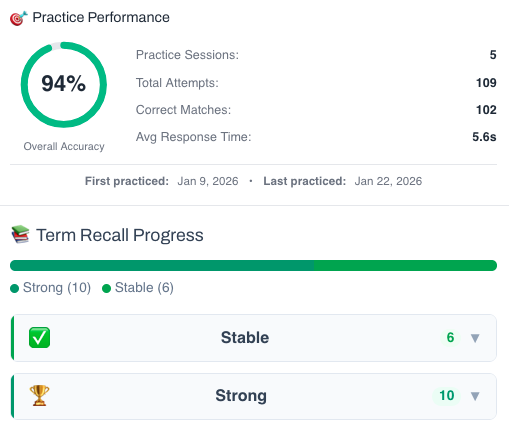
This isn’t a simple quiz — it’s a fully tracked learning system. You build knowledge through recognition, then recall, and your progress feeds directly into the Integrated Practice Bar (Writing tasks, AI Chat, and more).
- Practice sessions, accuracy, and response-time tracking
- Term strength levels (Learning → Stable → Strong)
- Personal progress history for each unit
This feature is available to YSP members.
Explore Membership Benefits