The Language of Waiting Tables
Core PathWay
1 Section 1. Welcome to the World of Waiting Tables
Ready to build your vocabulary for restaurant work? Here is where we start. Waiters have a busy job. They talk to customers, carry food, and solve problems — all at the same time. The first thing a waiter does is greet customers. This means saying hello and making guests feel welcome when they arrive. After that, the waiter will show customers to their table. This means taking them to the right place to sit. These two actions happen at the start of every shift. They are important because they create the first impression. A good waiter is friendly and calm when they greet and seat guests. Notice that both phrases use a verb + object pattern: ‘greet customers’, ‘show customers to their table’. This is very common in waiter vocabulary. Most of the key terms you will learn follow this same pattern.
2 Section 2. Menus, Dishes, and Taking Orders
Once customers are seated, the waiter’s next job is all about the menu. First, the waiter will hand out menus. This means giving a menu to each person at the table. Then the waiter may explain the menu. This means telling customers what the dishes are, how they are made, or what is in them. A good waiter can also recommend dishes. This means suggesting food or drinks that they think the customer will enjoy. For example, a waiter might say: ‘The pasta is very popular tonight — I’d definitely recommend it.’ When customers are ready, the waiter will take orders. This means listening carefully and writing down what each person wants to eat and drink. The waiter must also answer questions about dishes. Customers often ask about ingredients, portion sizes, or whether a dish is spicy. Being able to answer clearly is an important skill.
3 Section 3. Serving Food and Drinks
After the kitchen prepares the food, it is time to bring it to the table. Waiters serve food — this means placing the dishes in front of the right customers. They also serve drinks, which might happen before the food arrives or during the meal. To do this, waiters carry trays. A tray is a flat board used to hold plates, glasses, and cups. Carrying a full tray safely takes practice. While customers are eating, a good waiter will check on customers. This means going back to the table to ask if everything is okay. For example: ‘Is everything all right with your meal?’ This small action makes a big difference to the customer’s experience. At the end of the meal, the waiter will bring the bill. The bill is the piece of paper that shows how much the customer needs to pay. Then the waiter will take payments. This means collecting the money or processing a card.
4 Section 4. Behind the Scenes — Tables and the Kitchen
A lot of waiter work happens away from the customers. Before the restaurant opens, waiters set tables. This means arranging the plates, glasses, knives, forks, and napkins so everything is ready for guests. Waiters also clean the dining area and prepare the restaurant for service. These tasks make sure the restaurant looks clean and professional before customers arrive. During and after the meal, waiters clear tables. This means removing used plates, glasses, and cutlery when customers have finished eating. Good waiters also communicate with the kitchen. This means talking to the chefs about orders, special requests, or problems. For example, if a customer has an allergy, the waiter must tell the kitchen immediately. Strong communication between the front of house — where waiters work — and the kitchen is essential for a smooth service.
5 Section 5. Managing the Floor — Skills and Pressure
Being a waiter is not just about carrying plates. It also requires strong organisation and mental focus. A waiter must remember table numbers. Each table in a restaurant has a number so that orders go to the right place. Good waiters also handle several tables at once. This means looking after more than one group of customers at the same time. This is one of the most challenging parts of the job. Waiters also need to deal with complaints. This means listening to a customer who is unhappy and trying to find a solution. For example, if a dish is wrong or cold, the waiter must stay calm and fix the problem quickly. All of this means that waiters must work under pressure. In other words, they must do their job well even when the restaurant is very busy and stressful. The ability to stay calm and organised is what separates a good waiter from a great one.
6 Section 6. The Realities of the Job — Shifts, Uniforms, and Tills
There are some practical realities to working as a waiter that are good to know. Waiters often work long shifts. A shift is a period of time that someone works. Long shifts can last eight hours or more. Many waiters also work evenings, because restaurants are busiest at dinner time. Most restaurants ask their staff to wear a uniform. This means wearing a specific set of clothes chosen by the restaurant, such as a black shirt and apron. Waiters also need to use a till. A till is the machine used to record payments and give change. Knowing how to use a till quickly and correctly is an important practical skill. Together, these terms describe the everyday realities of the job — the hours, the appearance, and the tools. Knowing this vocabulary helps you talk about waiter work clearly and confidently.
Member-Exclusive Practice Bar
Access a wide range of integrated practice for this unit — from Vocabulary and Grammar activities to AI-curated Writing tasks and Thematic Chat practice.
This feature is available to YSP members.
Explore Membership BenefitsMember-Exclusive Vocabulary Review & Acquisition System
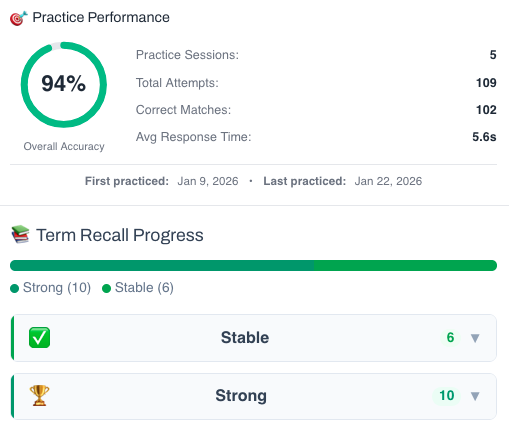
This isn’t a simple quiz — it’s a fully tracked learning system. You build knowledge through recognition, then recall, and your progress feeds directly into the Integrated Practice Bar (Writing tasks, AI Chat, and more).
- Practice sessions, accuracy, and response-time tracking
- Term strength levels (Learning → Stable → Strong)
- Personal progress history for each unit
This feature is available to YSP members.
Explore Membership Benefits