The Language of Mechanics: What Mechanics Do Every Day
Core PathWay
1 Section 1. Welcome to the Garage
Ready to build your vocabulary for mechanics? Here’s where we start.
Mechanics work in a garage. This means they do their job inside a building where vehicles are brought for care and repair. A garage is a busy place. Every day, mechanics look at many different vehicles.
One of the first things a mechanic does is inspect vehicles. This means they look carefully at a vehicle to find any problems. They check many parts — the engine, the tyres, the brakes, and more.
Mechanics also carry out safety checks. This means they test important parts of the vehicle to make sure it is safe to drive. Safety is always the first priority in a garage.
To do their job well, mechanics must wear overalls. Overalls are a type of clothing that covers your whole body. They keep the mechanic’s clothes clean. Mechanics also wear protective gloves to keep their hands safe from sharp parts and chemicals.
2 Section 2. Finding the Problem
Before a mechanic can fix a vehicle, they need to find out what is wrong. This is called finding the fault.
Mechanics diagnose faults. This means they identify exactly what is wrong with a vehicle. It is a bit like a doctor finding out why a patient is unwell — but for cars!
To help them do this, mechanics use diagnostic equipment. This is special electronic equipment that connects to the vehicle and shows information about the engine and other systems. It helps the mechanic find problems quickly.
Mechanics also use hand tools every day. Hand tools are simple tools you hold and use by hand — for example, spanners, screwdrivers, and pliers. These tools help mechanics open, tighten, and adjust parts of a vehicle.
Sometimes a vehicle needs to be raised off the ground so the mechanic can look underneath it. To do this, mechanics lift vehicles using a special machine called a hydraulic lift. This makes it much easier and safer to work on the underside of a car.
3 Section 3. Servicing and Maintaining Vehicles
Mechanics do not only fix broken vehicles. They also take care of vehicles that are working well. This is called servicing.
When mechanics service vehicles, they check and replace many parts to keep the vehicle in good condition. A service is a regular check-up, a bit like a health check for a car.
One very common job is to change the oil. Oil keeps the engine running smoothly. Old oil gets dirty and thick, so it needs to be replaced regularly.
Mechanics also replace filters. Filters clean the air and oil that go into the engine. When a filter is old or dirty, it stops working well, so the mechanic puts in a new one.
Another important task is to check fluid levels. Fluids are liquids that vehicles need to work — for example, coolant, brake fluid, and windscreen washer fluid. The mechanic checks that all these liquids are at the right level.
Mechanics also test batteries. A car battery gives the vehicle the power it needs to start. If the battery is weak, the car might not start at all, so the mechanic tests it to see if it is still good.
4 Section 4. Repairs and Replacements
When a vehicle has a serious problem, the mechanic needs to fix it. This is called carrying out a repair.
Mechanics repair engines. The engine is the most important part of a vehicle. If it has a problem, the mechanic opens it up and fixes the damaged parts.
Mechanics also check brakes to make sure they work correctly. Brakes are the system that slows down and stops the vehicle. If the brakes are not working well, the vehicle is dangerous.
When brake pads are worn out, mechanics replace brake pads. Brake pads are small parts that press against the wheel to slow the car down. They wear down over time and must be replaced.
Mechanics also repair tyres when they are punctured or damaged. A puncture means there is a hole in the tyre and air is coming out. Sometimes the tyre can be fixed, but sometimes it is too damaged.
When a tyre is too damaged to fix, mechanics change tyres. This means they take off the old tyre and put on a new one.
Mechanics also replace worn parts. A worn part is a part that has been used so much that it no longer works well. The mechanic removes it and puts in a new part.
5 Section 5. Working Safely and Following Procedures
Good mechanics always follow rules and procedures. This keeps them safe and helps them do their job correctly.
Mechanics follow repair manuals. A repair manual is a book or digital guide that explains exactly how to fix or service a specific vehicle. Different vehicles have different manuals, so mechanics always check the right one.
Mechanics also order spare parts when they need to replace something. A spare part is a new part that replaces a broken or worn one. The mechanic contacts a supplier and orders the part they need.
After a repair or service is complete, the mechanic often does a final check by doing a test-drive. This means the mechanic drives the vehicle to make sure it is working well after the repair. It is the final step before giving the vehicle back to the customer.
Mechanics also keep maintenance records. This means they write down all the work they have done on a vehicle. These records are important because they show the history of the vehicle’s repairs and services.
6 Section 6. Talking to Customers
Mechanics do not only work with vehicles — they also communicate with customers. This is an important part of the job.
Mechanics explain faults to customers. This means they tell the customer what is wrong with their vehicle in simple language. The customer may not understand technical words, so the mechanic must explain clearly.
Mechanics also estimate repair costs. This means they calculate roughly how much the repair will cost and tell the customer before they start the work. An estimate is not an exact price — it is an approximate figure.
Good communication helps customers feel confident and informed. When a mechanic explains a fault clearly and gives a fair cost estimate, the customer knows they can trust the garage.
These communication skills are just as important as technical skills. A great mechanic can fix a car AND talk about it clearly.
Member-Exclusive Practice Bar
Access a wide range of integrated practice for this unit — from Vocabulary and Grammar activities to AI-curated Writing tasks and Thematic Chat practice.
This feature is available to YSP members.
Explore Membership BenefitsMember-Exclusive Vocabulary Review & Acquisition System
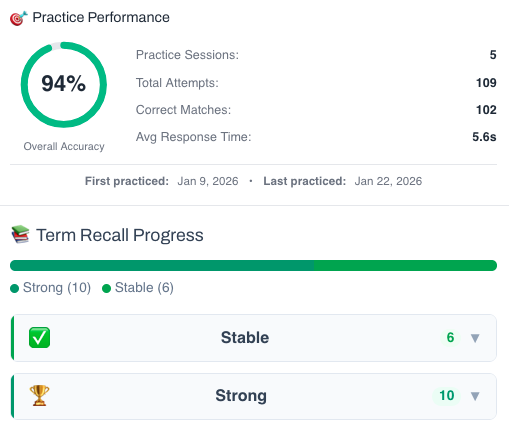
This isn’t a simple quiz — it’s a fully tracked learning system. You build knowledge through recognition, then recall, and your progress feeds directly into the Integrated Practice Bar (Writing tasks, AI Chat, and more).
- Practice sessions, accuracy, and response-time tracking
- Term strength levels (Learning → Stable → Strong)
- Personal progress history for each unit
This feature is available to YSP members.
Explore Membership Benefits