Office Workers: The Essential Vocabulary Pack
Core PathWay
1 Section 1. Welcome to the Office
Office workers have their own language — and these are the terms that will make the difference. Most office jobs follow a regular pattern. You work regular office hours, which means you start and finish at the same time every day. During the day, you work at a desk — this is where most of your tasks happen. It is important to take breaks during the day. This means stopping work for a short time to rest. Without breaks, it is hard to stay focused. A good office worker also knows how to prioritise tasks. This means deciding which jobs are most important and doing those first. Not everything can be done at the same time, so this skill is very useful. Finally, you need to meet deadlines. A deadline is the date or time when something must be finished. If you meet a deadline, you finish the work on time.
2 Section 2. Communicating at Work
A big part of office life is communication. You answer emails every day — this means you read messages and write replies. You also make phone calls to speak with people directly. Sometimes you need to attend meetings. This means you go to a meeting and take part in it. At meetings, it is a good idea to take notes. This means you write down the important things that people say. You also need to communicate with colleagues. Colleagues are the people you work with. Good communication helps the team work well together. You will also contact clients. Clients are people or companies that buy a service from your company. When you contact them, you might call, email, or meet them in person.
3 Section 3. Planning and Organising Your Day
Office workers spend a lot of time planning. One key task is to schedule appointments. This means you arrange a time to meet someone or do something. You also need to manage calendars. A calendar shows all your meetings, deadlines, and appointments. When you manage a calendar, you keep it organised and up to date. Another common task is to book meeting rooms. This means you reserve a room in your office for a meeting. Meeting rooms are often shared, so you need to book them in advance. Good planning also means you can solve problems when things go wrong. For example, if two meetings are at the same time, you need to find a solution quickly.
4 Section 4. Handling Documents and Data
Office workers deal with a lot of documents and information. You often need to prepare documents — this means you create or get ready a letter, form, or report before it is used. You also write reports to share information with your team or manager. A report gives facts and details about a topic or a project. Another important task is to organise files. Files are documents — either on paper or on a computer. When you organise them, you put them in the right place so they are easy to find. You also need to deal with paperwork. Paperwork means forms and documents that need to be completed or signed. It is also common to enter data into a computer system. This means you type information into a database or form. You may also update records — this means you change information to make sure it is correct and current. It is very important to handle confidential information carefully. Confidential information is private — it must not be shared with people who should not see it.
5 Section 5. Using Technology in the Office
Technology is a central part of office work. Most office workers use office software every day. Office software includes programs for writing, organising data, and making presentations. One very common tool is a spreadsheet. When you use spreadsheets, you work with tables of numbers and data. Spreadsheets are useful for tracking budgets, sales, or schedules. You will also create presentations for meetings or reports. A presentation is a set of slides that shows information in a clear, visual way. These three skills — using software, working with spreadsheets, and creating presentations — are important in almost every office job today.
6 Section 6. Requests, Tasks, and Responsibilities
Every day, office workers receive tasks and requests from different people. You need to process requests — this means you receive a request and take the steps needed to complete it. For example, a client might ask for information, and you find it and send it to them. You also need to handle confidential information with care at every step. Remember: this means keeping private information safe and not sharing it without permission. Good office workers also know how to manage their own work. They prioritise tasks so the most urgent work gets done first. They always try to meet deadlines and keep their colleagues informed. When you can do all of this — communicate well, organise your work, use technology, and deal with paperwork efficiently — you are ready to succeed in any office environment.
Member-Exclusive Practice Bar
Access a wide range of integrated practice for this unit — from Vocabulary and Grammar activities to AI-curated Writing tasks and Thematic Chat practice.
This feature is available to YSP members.
Explore Membership BenefitsMember-Exclusive Vocabulary Review & Acquisition System
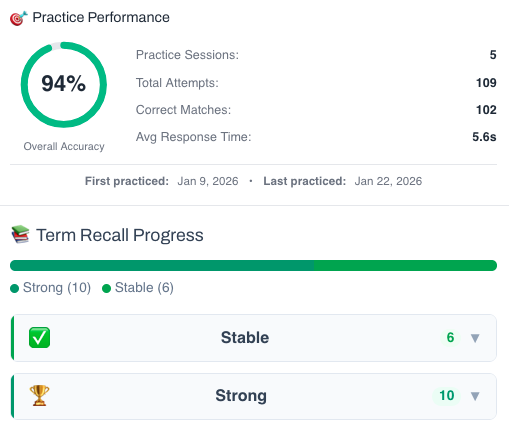
This isn’t a simple quiz — it’s a fully tracked learning system. You build knowledge through recognition, then recall, and your progress feeds directly into the Integrated Practice Bar (Writing tasks, AI Chat, and more).
- Practice sessions, accuracy, and response-time tracking
- Term strength levels (Learning → Stable → Strong)
- Personal progress history for each unit
This feature is available to YSP members.
Explore Membership Benefits